Ask The Art Story AI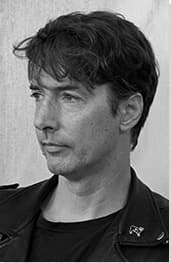

Summary of Richard Phillips
Phillips has built his reputation on a series of luxuriant photorealistic paintings based on the worlds of advertising, fashion, and glamor magazines. Vast in scale, many of his signature pieces are influenced by print media that dates back to the '50s, '60s, and '70s. Like his predecessors in the Pop Art movement, Phillips does not distinguish between "low" and "high" culture. His famous portraits of celebrities such as Lindsay Lohan, and former adult film actress, Sasha Grey, for example, are executed in a considered academic manner. Given his highly polished takes on sexuality and sexual desire, Phillips is dismissed by some as a mere provocateur. But his art strives for much more than lurid sensationalism. Indeed, his art is underwritten by a sense of critical commentary that invites his audience to ask questions about societal values and their inherent contradictions. While he remains best known for his painting, Phillips has diversified to embrace film and video, photography, and sculpture. His thematic concerns have followed him throughout his career, but Phillips has also embraced his love of surfing and motorsport through his art.
Accomplishments
- Many of Phillips's paintings combine oil paint and wax emulsion that imitate the surface of glossy magazines. But when looking beyond their surface attractions, his viewer is invited to ponder ideas akin to the interdependency of fashion, sexual desire, advertising, capitalism, consumerism, and fine art. Phillips has said, "People get confused when they see my shows, but that isn't the intention. My intention is to destabilize the act of seeing".
- Moving beyond the spheres of sexual titillation, his paintings focused on the world of 1970s pornographic magazines with Phillips reworking his "lowly" source material in an academic, Venetian style. The Origin of the Milky Way (1990), for example, was named and executed by Phillips in honor of one of his favorite works by Tintoretto, the Venetian Mannerist who is famed for the scale and luxury of his paintings.
- If his choice of subject matter was not enough to upset the art purist, Phillips's willingness to work with the corporate world merely reinforced those preconceptions. He has partnered with several glamor and lifestyle companies, including Jimmy Choo, Tommy Hilfiger, and Cartier. Defending his controversial roadside sculpture for Playboy in Marfa, Texas, for instance, Phillips said, "I do not make a distinction between the categories that cultural institutions need to construct in order to justify their existence".
- Phillips's art has extended into two of his great passions, surfing and motorsport. In respect of the former, First Point (2010), his first "motion portrait", was an homage to the 1960s surfer films, while Canyons I, and Canyons II (2015), belonged to a series of large-scale pigment prints (embossed with the Playboy Bunny logo) that were Phillips's own take on the Mexican sarape rug. To those within the surfer subculture, these are more commonly known as "drug rugs".
Important Art by Richard Phillips

Glasses
In the mid-1990s, having recently completed a residency at the University of Tennessee, Phillips returned to New York where he was "struck by the enormity of cosmopolitan life and how much one was assaulted by fashion imagery in advertisements on every possible surface". He was duly inspired to create a series of large-scale portraits of fashion models. Phillips states that his paintings were "presented without any type of narrative embellishment", and that his idea was "to show what these images were capable of projecting on their own". One such painting is Glasses. It shows the head of a female model, her hair pulled back tightly, wearing oversized clear-rimmed glasses, and foregrounded against a sky-blue background. Phillips says of the series, "I wanted them to be read quickly, like a Pop painting. [But I also] wanted to rob Pop of its commercial feeling and re-embody it with beauty in oil painting. I didn't change the images, other than to paint them as beautifully as I could. [...] It was fascinating to find the outside limit of desire that you see in fashion advertising. It was a way to consider how painting could be used for its manipulative power".
Arts writer Linda Yablonsky has noted that this early series of paintings of models was "kind of frightening because of their scale", and indeed, since this early stage in his career, he has regularly painted enormous canvases. This preference was inspired, at least in part, by his first experience of seeing the large-scale paintings of American Expressionists including Mark Rothko, Willem de Kooning, and Jackson Pollock, as well as the Neo-Expressionists like Helmut Middendorf, Markus Lüpertz, and Anselm Kiefer. These pieces brought him to the realization that "there was an American scale of painting that could at the very least be a backdrop for living. [...] Scale can overwhelm, intimidate and stir emotion".
Oil on linen

The Origin of the Milky Way
In the 1990s, Phillips turned his attentions to the world of 1970s pornography which was for him "a time of sexual awakening and liberation in society and [...] in myself". Phillips referred to his painting technique as a reworking of the lyrical Venetian school. Indeed, The Origin of the Milky Way is named after one of his favorite works by the Venetian Mannerist, Tintoretto, who was known for his extravagant and daring brushwork, and for the overwhelming scale of his paintings. Tintoretto's painting depicts the Roman myth of how the Milky Way was formed, when the God Jupiter sent his infant son Hercules (born out of an affair with a mortal woman) to be nursed from the breast of the sleeping goddess, his wife Juno. Phillips praised Tintoretto for "The magic of myth made real through the power of paint to carry multiple connotations simultaneously, amidst supernatural lighting effects creates an experience far beyond imagination". Phillips's take on this narrative features a naked blonde woman, looking down seductively at her viewer, while squeezing milk from her full breasts. The white milk dances in streams and droplets in front of the model, and against the black background of the image.
For Phillips, the erotic in his art has much more to do with love (eros) and freedom than with lewd indecency. He has spoken of how his "pornographic" images (such as Nude and Below (both 1997)) are connected to "the Californian sunset cliché of complete sexual and psychedelic freedom [...] a freedom involved only with itself, in which one's own nakedness and the feeling of exuberance reach their highest point". Elsewhere, Phillips has agreed with arts writer Linda Yablonsky that, yes, "using pornography as source material [is] a shortcut to making painting sexy". But he added that since "sex is a part of our lives" he wanted to challenge the idea that it "must not be seen anywhere but in pornography".
Oil on linen

Most Wanted (Justin Timberlake)
This large-scale painting of "triple threat" (dancer, singer, and actor) celebrity, Justin Timberlake, was part of Phillips's Most Wanted series. For this series, Phillips drew inspiration from Andy Warhol's Thirteen Most Wanted Men series of 1964, but replaced Warhol's criminals with ten of the most famous American entertainers. Nearly two meters tall, the exhibition featured five males: Timberlake, Chace Crawford, Zac Efron, Leonardo DiCaprio, and Robert Pattinson; and five females: Kristen Stewart, Miley Cyrus, Taylor Momsen, Dakota Fanning, and Taylor Swift. Each is set against a branded background (such as Calvin Klein in the Timberlake portrait, Chanel in the Momsen portrait, and Gucci in the Cyrus portrait) like those used for red carpets publicity shots. Says Phillips, "The real in this case comes more from the fact that these are images that are literally useless. They appear a million times over on celebrity blogs, and their realness or their level of realism has been utterly mitigated by their saturation". He adds that "these [figures] are the most sought-after men [and women] right now for their talents and their availability [but these] photographs locate moments when they're not acting. They're not doing anything but using their celebrity to advance commercial agendas".
Emphasizing the way in which celebrities are reified, even deified, in contemporary American society, Phillips has surrounded each figure with a colored halo (a nod towards the similar stylistic choice made by artist Richard Bernstein in his portraits of celebrities created for the covers of Interview magazine between 1972 and 1989). At the same time, however, the haloes serve to flatten the images, reducing the celebrities' images to something more like logos in themselves, mere visual devices for selling products. As arts writer Malaika Byng notes, "Placing these icons of mass culture in a high art setting [London's White Cube gallery] is cleverly jarring. It makes the show's message about the subservience of artistic endeavours to the dominant presence of celebrity endorsement all the more potent".
For its part, the White Cube Gallery said of the exhibition, "Phillips uses a traditional oil-painting practice that refutes photorealism and, with its luminous colours and meticulous detail, evokes the methods of Northern Renaissance painters. As a constant cascade of celebrity imagery crowds our visual environment, the language of painting slows the rush to a dead stop, giving us time to consider our relationships with these icons and the vested interests that support them. A strong sense of these personalities, as well as the self-consciousness of their well-rehearsed images, is communicated through the nuanced flesh tones and expressions".
Color pastel on grey toned paper

First Point
Around the turn of the century, Phillips took up recreational surfing. In addition to its benefits as a form of physical activity, he was drawn into the world of surf subculture. In 2012, he partnered with legendary surf filmmaker, Taylor Steele (whom he had met while serving as a judge at the New York Surf Film Festival), to create a five-and-a-half minute "motion portrait" entitled First Point. Commenting on his motion portrait format, Phillips explained that it is "meant to be a destabilizing artwork. It's not quite film, and it's not quite video art, and it's not quite action .. [rather] it exists in another area. It's a zone where we were free to work".
First Point features the actress Lindsay Lohan sunbathing and surfing in Malibu, California (although a body double, surfer Kassia Meador, was used for the surfing scenes). The motion portrait, which premiered at Art Basel's Art Unlimited, combines images of surfing and sunbathing with film-noir (chiaroscuro) style shots of Lohan at night. Phillips drew particular inspiration from director David Lynch's surrealistic neo-noir Lost Highway (1997), as well as from classic surf films such as The Endless Summer (1966) and Free and Easy (1967). First Point also features original music composed by Daft Punk's Thomas Bangalter. Said Phillips, "The soundtrack absolutely defines the daymare into nightmare feeling you get from the film". First Point was edited by Jay Rabinowitz, who has worked previously of Darren Aronofsky's Requiem for a Dream (2000) and Terrence Malick's The Tree of Life (2011).
Phillips says of First Point, "Because of the actor and the popular culture dimensions of the project, it will give people - especially people in the art world - a real sense of instability with regard to my intentions. Is it a film? Is it an art video? It refuses to announce itself as either". Phillips further collaborated with Lohan in 2011-12 on a fake perfume commercial, and on several paintings based on still shots from First Point. His fascination with the actress stems from what he called her "iconic presence". As he puts it, "There isn't really anybody who occupies the lens to the extent that Lindsay Lohan does. Something happens when she steps in front of the camera. There is this magnetic energy". In a different interview (also from 2012), he suggested that Lohan had "embodied Marilyn Monroe, and now she's embodying Elizabeth Taylor, but she's arguably more beautiful than both of them. She is very aware of the way that an icon is constructed, and that's something that is unique".
Motion portrait

Playboy Marfa
In early 2013, Phillips was invited by Neville Wakefield, Creative Director for Special Projects at Playboy, to create a sculpture for the iconic men's magazine and media company. The two men had worked together previously at the 2011 Venice Biennale when Wakefield curated Commercial Break, an "artistic intervention" compiled of over sixty fake advertisements (Phillips contributed a fifteen-second "1990s style" perfume commercial starring Lindsay Lohan). Wakefield asked Phillips to "look into Playboy's history, imagine its future, and energize the image of the brand". Aside from the opportunity to be associated with such a famous brand, Phillips was attracted to working in Marfa given that it is, in his words, a "global reference point for modern sculpture" (where Donald Judd, Dan Flavin, and John Chamberlain had all established strong creative ties.)
As an artist best known for his sexualized paintings of women, Phillips somewhat defied expectations when the project was unveiled. His installation, a black 1972 Dodge Charger car, was placed on a tilted concrete platform, next to a forty-foot-high neon sign of the famous Playboy bunny logo. Phillips chose to paint his car black in order to "focus on it as a form" and to emphasize the car's strong "sense of passion, speed, eroticism, and fantasy". The Dodge also included Playboy bunnies embroidered on the headrests, inlaid on the chrome-plated pistol grip shifter, and even embossed on the valve-cover caps. The neon Playboy bunny sign, meanwhile, would be visible at night, with its setting, away from all urban surroundings, allowing "the landscape itself [to become] the ultimate critical backboard".
Playboy Marfa quickly generated controversy amongst local residents and business leaders. The sculpture was categorized as corporate advertising (rather than as an artwork) and was removed by the Texas Department of Transportation on the questionable grounds that it violated the Highway Beautification Act. Said Phillips, "I think that anytime we put work out into the public, it's a great opportunity to ignite a discussion. I knew that there would be a multi-faceted discussion, especially when you bring Playboy into the mix, which in its own unique way reconciles and brings together different facets of life - eroticism, politics, and journalism. [...] I think that when people saw the sculpture, it brought up strong feelings in both directions". Playboy Marfa was given a new, more accepting, home at Dallas Contemporary - a visual arts center in Dallas, Texas, in 2014.
Installation - Highway 90, Marfa, Texas

Rainbow Sharon
In 2015 Phillips set about creating a series of paintings that were much smaller than his typical works and which moved away from "dimensional reality" towards a "more two-dimensional [and] more luminous quality". One such work from the series is Rainbow Sharon, in which patchy horizontal bands of rainbow colors form the image of a head-shot portrait of 1960s model and actress Sharon Tate (who was also the subject of his first celebrity painting in 1995). Tate, when twenty-six years old, and eight-and-a-half months pregnant with the child of film director Roman Polanski, was one of five people murdered by the infamous Manson Family cult. Phillips chose to represent Tate because her "position as an actor, model, and icon of celebrity culture amplified the tragedy of the loss collectively felt by her senseless murder", and also because of her "wasted beauty".
For Rainbow Sharon Phillips used fluorescent pigmented oil paint and wax emulsion, which, as he explains, "gives a smooth and beautiful surface" as well as a thicker, more tactile quality. Says Phillips, "The graphic quality of the imagery combined with the physical emphasis of the painting process opens up a different way to experience content. It effects the senses in a way that is less focused on the assessment of mimetic description and more on how color and surface generate an emotional response". His visual inspiration for the series came from Albert Oehler's pixelated, low-resolution, Computer Paintings of the 1990s, popular psychedelic posters of the 1960s and 1970s, as well as the heavily saturated and flat graphic style of the 'zines published between 1967-71 by the Process Church of the Final Judgment cult (that gave evidence against Manson and his followers during their trial). Several of these 'zines were collected by Phillips's friend, rare book dealer and gallerist John McWhinnie, who had gifted them to Phillips.
Oil and wax emulsion on linen

Porsche Taycan 4S Artcar
Phillips, a longtime motorsport enthusiast, has taken a strong interest in the car-themed art of earlier artists, such as Richard Prince and his Hoods series (1988-2013), for which Prince acquired and re-painted the hoods of 1960s and 1970s "muscle cars"; and Gabriel Orozco's structurally-modified Citroën DS artwork, La DS (1993). With regard to the former, Phillips praised the way in which Prince "took the idea of customization, as an American tradition, and put a focal point on it as artwork". In respect of the latter, Phillips spoke of how Orozco executed a work of art as "engineering gone mad [and that] I like that this art takes the idea of aerodynamic efficiency and creates a form and an entity that could express the unthinkable". In 2020 Phillips followed the examples of Prince and Orozco when he customized a high-performance sports car for Porsche, the iconic German car manufacturer. The Porsche Taycan 4S Artcar was the company's first all-electric sports model.
Phillips's vibrant livery was based on his 2010 still-life painting, Queen of the Night, his homage to the Swiss Outsider artist Adolf Dietrich. Phillips said, "Using figurative imagery like I had for the Le Mans car [Phillips created a Porsche 911 RSR art car for the 2019, 24 Hours Le Mans race] didn't seem to be appropriate, especially for electric mobility and the idea of sustainability and environmental issues". However, the project asked for more than merely copying his original painting onto the Porsche's body. As Phillips explained, "The first sketches that I made were literally a still life on top of a car ... which was a bit too still. I had to re-think that idea and take the elements of the still life, take them apart and make them become elements that could flow across the contours of the car, to show speed".
Sotheby's auction house said of the Taycan 4S, "the dramatic contrast between the Queen of the Night's titular night-blooming cactus and sky-blue patches replete with butterflies establishes a sense of motion, even when the car is standing still. Yet the Artcar also rewards close inspection and appreciation". Phillips himself commented that "as you get closer [to the car], there's more beauty in the details, and that really lends back to Dietrich - who is somebody who found an almost spiritual identity with detail in his painting". The car sold for $200,000 in a charity auction on behalf of the Swiss non-profit organization Suisseculture Sociale, with all proceeds of the sale distributed amongst Swiss artists whose livelihoods were adversely impacted by the COVID-19 lockdown.
Car livery - Private owner
Biography of Richard Phillips
Childhood
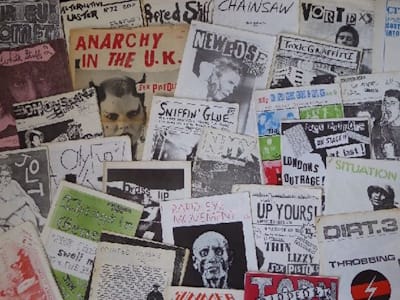
Richard Phillips was born in the coastal town of Marblehead, Massachusetts, in 1962. Little is recorded about his early years, but he has said that his childhood love of drawing was actively encouraged by grandparents who were dedicated "Sunday painters". When he reached his mid-to-late teens Phillips became interested in Punk music and the associated Dada-inspired "zines" (fanzines) subculture. He recalled that at this stage in his life he did not have any "sense that art could be a profession at all". That changed when he graduated high school and enrolled at the Massachusetts College of Art and Design (MCAD), in Boston in 1981.
Education and Early Training
Phillips earned a Bachelor of Fine Arts in painting from MCAD in 1984. By this time he had made the decision to pursue a career in fine art and joined the Yale School of Art where he studied alongside Matvey Levenstein, John Currin, and Lisa Yuskavage. He received his Master of Fine Arts from Yale in 1986 and then moved to New York. "Downtown New York was lawless, and it was wild. I had some crazy times", he fondly recalled.
In the early 1990s Phillips took a job as an assistant at the Guggenheim Museum. During this period, he was producing his own satirical line drawings, similar to those of George Grosz, and experimenting with upholstered sculptures. Of the latter, Phillips says, "I was inspired by having seen a work by Blinky Palermo where he had stretched drab green, monochrome cotton or linen fabric over the bars of a canvas stretcher and used it as a stand-in for painting. When I came to New York, I had the leather industry within easy reach, so I started doing my own work with it, but I put padding behind the stretcher to change its shape and make it into a sensual experience".
Phillips was also influenced by the works of Jeff Koons, and especially Albert Oehlen, having stumbled upon one of his "mirror paintings" (Oehlen placed mirror collages on his canvases as a way of directly involving his viewer in his art) in the loft of gallerist Daniel Newburg (whose party he had gatecrashed in 1992). Says Phillips, "it was such a startling painting that it literally ignited my interest. You could say my entire painting life is the result of crashing a party!". In 1994, Phillips took up a residency at the University of Tennessee, treating it as the perfect opportunity to experiment with a whole variety of painting styles.
Once back in New York in the mid-1990s, Phillips came across a cache of discarded fashion magazines, ranging in date from the 1950s to the 1970s, left on the street by a fashion photographer who had moved out of a nearby apartment. Phillips pored over their content, using many of the images as the basis for his own paintings. Phillips describes his painting technique as "very traditional Venetian". He says, "[I start] by making charcoal and chalk drawings on grey toned paper. These drawings, although smaller, allow for the initial translation of the photographic to the drawing and later painted image. Once a painting is decided on I will have stretchers made to size and stretch, glue, and oil prime them by hand. Once the primer is dry I will stain the primed linen with an imprimatura upon which I will set a grid with pencil grid and later paint a monochrome grisaille of the final image using a thin oil and turpentine medium. For the final full color painting of the image over the grisaille the medium will be more viscous and the application of paint more opaque".
Phillips's first solo exhibitions were held at the Edward Thorp Gallery in SoHo, New York between 1994 and 1996. A year later he held a personally-significant exhibition at the Turner & Runyon Gallery, in Dallas, Texas (his first ever visit to the state). He stated, "Texas has been a very important part of my art career [It] could not be more different than New England, where I grew up, or any other part of the country that I had been to. I have a stronger connection to Dallas than any other city in the country, with regard to my artwork".
Mature Period
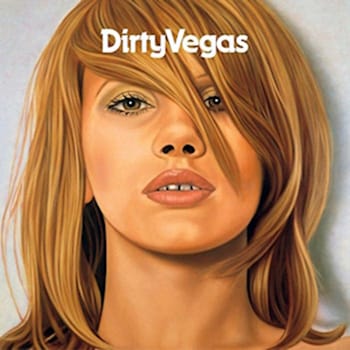
In 2002, Phillips was nominated for a Grammy award in the best album artwork category for Dirty Vegas (for the British house music trio of the same name). Phillips had produced a series of album sleeves based on magazine advertising and "gentlemen's magazine" covers from the 1970's. The series consisted of large format paintings intended to evoke hand-painted murals and billboard art. Parlophone (the group's record company) chose the images because they seemed to capture the idea of a seedy (ergo "dirty") Las Vegas. Around this time, Phillips became enamored by the landscapes and still life paintings by Swiss Outsider artist Adolf Dietrich, whose work he was introduced to by the fellow artist Peter Fischli while dining at the famous Kronenhalle restaurant in Zürich (a setting that boasts a fine collection of artworks by the likes of Matisse, Miró, Chagall, and Giacometti).
In December 2007, the luxury fashion brand, Jimmy Choo, announced the release of two limited edition bags. Both clutch and tote bags featured details, respectively, from his portraits, Nuclear (1997), and Small Riot (1998), each based on 1960s and 1970s beauty advertisements. The hard-resin clutch bag resembles a glossy advertisement folded in two, and features a woman's eyes, made radiant through green eye shadow and extravagant extended lashes. The tote bag, meanwhile, is made from PVC-coated canvas and is covered with black-and-white images (aside from blue colored eye shadow) of women's faces adapted from the original painting. The bags were more affordable (relatively speaking) than Jimmy Choo's usual range of accessories. Jimmy Choo president, Tamara Mellon explained, "I didn't want to make these bags $5,000 [the clutch bag retailed at $595 and the tote for $975] I wanted to make them available to a wider audience. I'm also hoping that younger customers, who wouldn't necessarily be able to afford our core product, can buy these. People are so fascinated by contemporary art today. I want our customers to feel they're carrying a piece of art".
In 2008 a scaled-down version of Phillips's 1998 painting, Spectrum, found a vast audience through its prominent placement in the popular television series, Gossip Girl (2007-12). A teen drama following the lives of privileged socialites living in New York's Upper East Side, the series was noted for (amongst other things) its "curated gallery". The producers of Gossip Girl had partnered with the New York's Art Production Fund (APF) to place authentic artworks on the set of the show. Spectrum takes pride of place on the apartment staircase of Gossip Girl's matriarch, Lily van der Woodsen's (Kelly Rutherford), who also owns works by Elmgreen and Dragset, Ryan McGinley, Kiki Smith, and Marilyn Minter. Arts and entertainment writer Lucy Donovan called Spectrum "the most iconic artwork of the entire show [...] a striking blend of vibrant colors and bold brushstrokes [and] more than décor - it's a silent observer, a symbol of the artistic tapestry in Gossip Girl's glamorous universe". (Phillips was even given a walk-on part for the series, in the episode in which the painting is formally unveiled.)
In 2010 Phillips produced a still life, Queen of the Night, his unabashed homage to Dietrich. The following year the two artists were presented side-by-side in the exhibition (co-curated by Phillips), Richard Phillips - Adolf Dietrich, Painting and Misappropriation, at the Swiss Institute in New York, and later, the Kartause Ittingen museum in Warth, Switzerland. The exhibition catalogue states that "While Phillips' art is often criticised for being too literal, Dietrich's art has been pigeonholed as naive. The process of appropriation [by Phillips] throws a new light on both oeuvres, underscoring the classical qualities of Richard Phillips' paintings while revealing the radical qualities of Adolf Dietrich's compositions".
In 2011 Phillips unveiled his Most Wanted series, a collection of headshots (five male and five female) of well-known personalities from the world of entertainment and politics. These included musicians Justin Timberlake and Taylor Swift; and actors Leonardo DiCaprio and Kristen Stewart. London's White Cube Gallery said of the exhibition, "With this group of ten paintings, the artist proposes an immediate connection with mass audiences that have been categorically disenfranchised from the specialised interest of high art, inviting contemplation on the power of celebrity branding to shape the face of our future". Like many of his earlier pieces, these works were labeled Photorealistic or Hyperrealistic. But Phillips is not comfortable with that categorization. He has said, "[the Photorealists use techniques such as] mechanical or semi-mechanical means to [firstly] transfer the information to the canvas [whereas my art is about] architecture of color and form [over] the imitation of photographic effects".
In 2012 Phillips produced a five-and-a-half minute film, First Point. A keen surfer since the turn of the century, his "motion portrait" was co-directed with surf filmmaker, Taylor Steele, and starring the celebrity actress, Lindsay Lohan. Phillips said of the work, it is "not quite film, and it's not quite video art, and it's not quite action [it's] a zone where we were free to work". The following year, Phillips partnered with Playboy magazine - one of a number of luxury brand collaborations including the likes of MontBlanc, Jimmy Choo, Tommy Hilfiger, MAC cosmetics, and Cartier - to create a sculptural roadside installation in Marfa, Texas. Phillips explained, "I believe some of the most important artists working today are working in the 'fashion world.' I do not make a distinction between the categories that cultural institutions need to construct in order to justify their existence".
In 2015 Phillips produced Canyons I, and Canyons II, a series of large scale pigment prints that overlayed photography from his Playboy commission, with patterns inspired by German artist Albert Oehlen's 1990s Computer Paintings (a series of basic pixelated patterns drawn with a computer mouse). Phillips took the Playboy logo and superimposed it (discreetly in the bottom corner) onto what amounted to an impressionist take on the Mexican sarape rug. The rugs, once seen as a fine art form and symbolic of Mexico's cultural identity, are now widely recognized as so-called "drug rugs" which were/are a feature of the surf culture.
In 2017 Phillips unveiled a new collection of paintings based on his own iPhone photographs of 1930s Neo-Classical sculptures (commissioned by fascist dictator Benito Mussolini) in Rome's Palazzo Della Civiltà and the Foro Italico. Phillips said, "I realised that there was great potential, and the power of these really decidedly anti-modernist sculptures was an appropriate subject for painting at this moment in time". Phillips printed the digital image on adhesive vinyl paper which he then attached to the canvas. Having cut the vinyl into strips, he applied a new layer of paint before removing the vinyl strips to leave the unpainted gessoed lines (gesso is a thin white, acrylic-like paint used to prime the canvas). The overall effect is a work that tricks the viewer into thinking that a print has been applied to the canvas, when in fact it had been painted by hand. As part of the same series, Phillips used detail shots from catalogues for Cy Twombly's Roman Salalah and Final series. Phillips referred to his Twombly pieces as a "kind of a memento mori of that final example of masterful expressionist painting".
In 2019, Phillips designed the livery for a Porsche 911 RSR. It was the first "art car" to win the world famous Le Mans 24-hour endurance race. The following year Phillips designed the livery for Porsche's first all-electric sports car, the Taycan 4S, for Porsche Switzerland. Based on his still-life painting, Queen of the Night (2010), the car was auctioned off (for $200,000) for a Swiss COVID-19 charity event in 2021. As of 2023, Phillips was "in the middle of a two year long private painting commission" which he says pushes him "to and beyond the limits of my art both conceptually and technically which is a place I am most happy working in". Phillips continues to live and work in New York City.
The Legacy of Richard Phillips
Phillips's photorealistic paintings tap into in the contradictions and double standards within the popular media, and especially its fixation on the themes of beauty, sex, and celebrity. Curator and critic, Éric Troncy, calls Phillips "the only true heir to the spirit of Pop", while art historian Daniel Baumann says, "This is the Pop art I love. [...] mass culture is a mess, a threat, an unpleasant thing, and Phillips dives in without fear". Indeed, while Pop Artists like Andy Warhol professed that his art was superficial, and all about surface attractions, Phillips is driven by an intention to use art to create discourse. Arts writer Isabella Meyer calls Phillips "compelling" in the way that his works "challenge viewers to reconsider the images that saturate their daily lives, blending critique with an undeniable celebration of aesthetic beauty".
Moreover, Phillips's meticulous simulacra exploit the power of large-scale canvases to create what he has called a "background for living". According to YBA artist Liam Gillick, Phillips's art is in fact "best experienced while looking over the shoulder of a person who you're talking to [in] a distracted state". But for Phillips, his paintings brought about a reciprocal effect. Possibly inspired by his love of Albert Oehlen's, "mirror paintings", Phillips has said that his large-scale paintings aim "to create the sense that [the paintings] themselves were examining a distracted viewer". The Gagosian Gallery commented: "As a self-conscious American painter weaned on postmodern appropriation strategies, Phillips is an active protagonist in the continually evolving discourse on the many lives and deaths of painting and how this interacts, throughout history, with the complex politics of making and reading images".
Influences and Connections
-
![Ernst Ludwig Kirchner]() Ernst Ludwig Kirchner
Ernst Ludwig Kirchner -
![Richard Prince]() Richard Prince
Richard Prince -
![Cy Twombly]() Cy Twombly
Cy Twombly ![No image available]() Albert Oehlen
Albert Oehlen![No image available]() Adolf Dietrich
Adolf Dietrich


-
![John Currin]() John Currin
John Currin -
![Lisa Yuskavage]() Lisa Yuskavage
Lisa Yuskavage ![No image available]() Taylor Steele
Taylor Steele![No image available]() Josephine Meckseper
Josephine Meckseper![No image available]() Neville Wakefield
Neville Wakefield


-
![Abstract Expressionism]() Abstract Expressionism
Abstract Expressionism -
![Pop Art]() Pop Art
Pop Art ![No image available]() Venetian Mannerism
Venetian Mannerism


![No image available]() Liam Gillick
Liam Gillick![No image available]() Peter Fischli
Peter Fischli
-
![John Currin]() John Currin
John Currin -
![Lisa Yuskavage]() Lisa Yuskavage
Lisa Yuskavage ![No image available]() Taylor Steele
Taylor Steele![No image available]() Josephine Meckseper
Josephine Meckseper![No image available]() Neville Wakefield
Neville Wakefield